Introduction
What Are Urban Sustainability Hacks?
Examples include regrowing vegetable scraps on your windowsill, making your own all-purpose cleaner from vinegar, or performing an “energy vampire” audit to find and unplug devices that secretly drain power. As noted in a Wired piece on modern frugality, there is a growing movement that intertwines financial savvy with environmental consciousness. **Budget sustainable living** is about recognizing that waste—whether it’s wasted food, energy, or single-use packaging—is also wasted money.
Why It Matters: The Frugal-Green Advantage
Adopting these hacks isn’t just a feel-good exercise; it delivers tangible benefits perfect for urbanites.
Slash Your Monthly Bills
Many of the biggest sources of household waste are also repeat purchases that slowly drain your bank account: paper towels, plastic wrap, cleaning sprays, coffee pods. By implementing reusable alternatives or DIY solutions, you eliminate these recurring costs. Similarly, simple energy-saving hacks can noticeably lower your electricity bill.
Declutter and Maximize Small Spaces
Urban living often means limited space. A minimalist, low-waste lifestyle naturally leads to a more organized and less cluttered home. When you stop buying disposables and focus on multi-functional, durable items, you free up precious cabinet and counter space, creating a more peaceful living environment.
Improve Your Health and Well-being
Many budget-friendly hacks also improve your health. Making your own cleaning products reduces your exposure to harsh chemicals. Reducing food waste often means eating more whole, fresh foods. The act of being resourceful and creative, such as by mending clothes or tending to a small plant, can also be a powerful stress reducer. For more lifestyle tips, explore our articles at Beasiswa Prestasi.
Top 10 Urban Sustainability Hacks for Your Apartment
Here are ten high-impact, low-cost hacks you can start today:
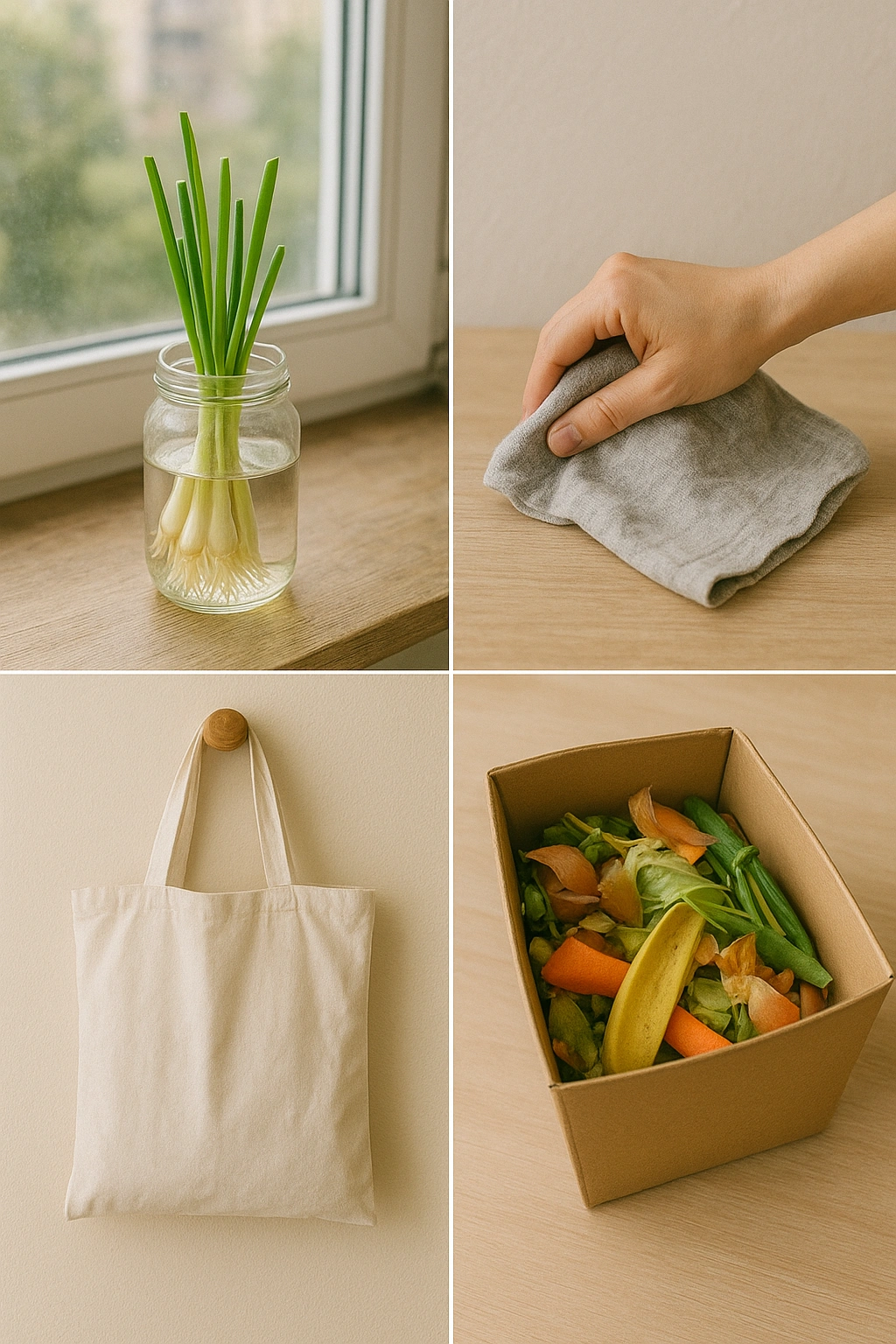
- The Re-Sprouting Kitchen Garden: Don’t throw away the root ends of green onions, celery, or lettuce. Place them in a shallow dish of water on a sunny windowsill, and they will regrow, giving you a free, continuous supply of fresh greens.
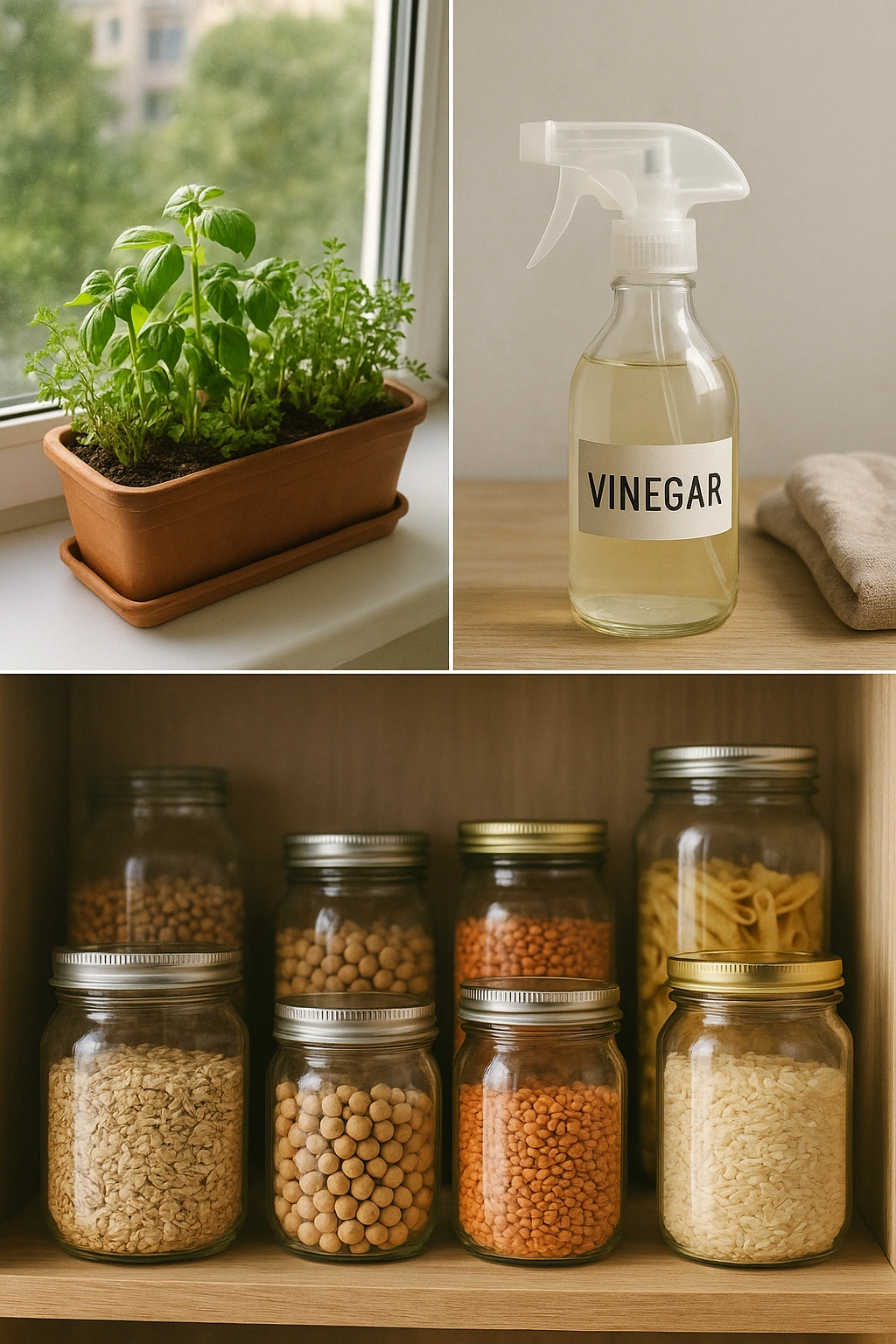
- The “Everything” Vinegar Cleaner: Fill a reusable spray bottle with one part white vinegar and one part water. This is a powerful, food-safe, and incredibly cheap all-purpose cleaner for countertops, windows, and floors.
- The “Energy Vampire” Hunt: Unplug chargers, TVs, and coffee makers when not in use. These devices draw standby power 24/7. Plug them into a power strip that you can easily switch off.
- The No-Buy Pantry Challenge: Before you go grocery shopping, challenge yourself to create a meal using only ingredients you already have. This forces creativity and drastically reduces food waste.
- The T-Shirt Rag Bag: Cut up old, stained t-shirts, towels, and socks to create a supply of reusable cleaning rags. You’ll never need to buy paper towels again.
- The “Use-It-Up” Jar: Keep a large glass jar on your counter for leftover bits of vegetables—half an onion, a few carrot sticks. At the end of the week, use everything in the jar to make a soup, stock, or stir-fry.
- The Free Jar Container System: Wash and save glass jars from pasta sauce, salsa, and pickles. They are the perfect, free containers for storing bulk foods, leftovers, and homemade broths.
- The Local Library of Things: Many public libraries now have a “Library of Things” where you can borrow items you only need occasionally, like a power drill, a sewing machine, or a large stockpot, for free.
- The Coffee Ground Power-Up: Don’t toss your used coffee grounds. They make a fantastic fertilizer for houseplants, a natural deodorizer for your fridge, or a gentle scrubbing agent for tough pans.
- The Hyper-Local Commute: Make a conscious effort to walk or bike for any errand under a mile or two. This saves money on gas or transit fare, incorporates exercise into your day, and produces zero emissions.
Comparison: The Cost of Convenience vs. Sustainability
Let’s break down the real-world cost savings of a few simple swaps over one year.
| Item | Disposable Option (Annual Cost) | Sustainable Hack (Annual Cost) | Year 1 Savings |
|---|---|---|---|
| Daily Coffee | K-Cups ($250+) | French Press ($30 upfront + $100 beans) = $130 | $120+ |
| Cleaning Spray | Store-bought bottles ($60+) | DIY Vinegar Spray ($5 for vinegar) | $55+ |
| Paper Towels | Regular purchases ($80+) | Reusable rags (from old clothes) = $0 | $80+ |
Common Mistakes in Budget Sustainable Living
- Buying “Eco” Clutter: You do not need a special composting bin that costs $200. You do not need a perfectly matched set of aesthetic glass containers. Start with what you have.
- Letting Food Spoil in Bulk: Buying from bulk bins is a great hack, but only if you actually use the food. If you buy a huge bag of lentils that sits in your pantry for a year, you’ve wasted both food and money. Start with small quantities.
- Ignoring Your Local Resources: Don’t forget to check what your city offers. You might have access to a free composting program, a tool library, or a fantastic public transit system that you’re underutilizing.
- Thinking Small Changes Are Pointless: It’s easy to think that saving one plastic bag doesn’t matter. But that one bag, saved every day, is 365 bags a year. Your small, consistent habits have a huge cumulative impact.
FAQ Section
What’s the cheapest way to start being sustainable in an apartment?
The cheapest way is to focus on reduction and reuse, which costs nothing. Start by refusing single-use items like straws and plastic bags. Then, conduct a ‘trash audit’ to see what you throw away most and find a reusable alternative you already own. For example, reuse glass jars for food storage instead of buying new containers. The most affordable hack is to simply consume less.
How can I reduce my energy bill in a rental apartment?
Start by unplugging ‘energy vampires’—electronics that draw power even when turned off, like phone chargers and TVs. Switch all your lightbulbs to energy-efficient LEDs. If you have control over your thermostat, lower it by a few degrees in the winter and raise it in the summer. Use draft stoppers under doors to prevent heat or cool air from escaping. These small changes can significantly lower your monthly bill.
Are DIY cleaning products actually effective?
Yes, for most everyday cleaning tasks, they are extremely effective. A simple solution of equal parts white vinegar and water is a fantastic all-purpose cleaner and glass cleaner due to vinegar’s acidic properties. Baking soda is a great gentle abrasive for scrubbing sinks and tubs. While they may not be federally registered disinfectants for killing specific viruses, they are perfect for the vast majority of household cleaning.
I have no balcony. Can I still compost?
Absolutely. Indoor composting is very manageable in small spaces. The most popular method is vermicomposting (a worm bin), which is odorless when managed correctly and can be kept under a sink or in a closet. Another option is an electric composter, a countertop appliance that quickly breaks down food scraps into fertilizer. Many cities also have local compost drop-off points at farmers’ markets.
Do I need to buy a lot of new products to have an eco-friendly small home?
No, and in fact, you shouldn’t. A core principle of sustainability is to reduce consumption. The most eco-friendly approach is to use what you already have. An old t-shirt can be cut up into cleaning rags, and a pasta sauce jar becomes a perfect container for bulk bin rice. Only when an item is truly at the end of its life should you consider purchasing a durable, sustainable replacement.
Conclusion: Sustainability is Smarter, Not Harder